Overall Content
The Los Angeles times provides people of the world and the Los Angeles community with the daily news, both global and local, as well as weather and other relevant media. The front page contains some space for advertisements currently taken up by Cadillac. With the credibility of a publication like the L.A Times the accuracy of information would be a top concern throughout the website. The information given is fair and balanced and the author's name and the date and time when each article was published is present. There are links for related sites if they are relevant to the story, as well as related articles. The Intended audience is anyone and everyone that wants to know whats happening in the world around them, more specifically there is a local version of the site for the Los Angeles area.
Compare with Other Resources
The site is very similar to other news sites as they all contend to cover a wide variety of news topics every day. The Website's value among other news sites is its proximity to the Hollywood film market; among its contenders would be the L.A local paper, Variety. The L.A Times covers an expansive amount of news topics from movie reviews to articles on buisness, also it links to different relative media.
Author
The authors are journalists who usually, but not always, have some sort of training or schooling behind them. As a long standing newspaper in America the L.A Times has a reputation for very reputable journalists, while there are other types of writers that contribute to editorials. The site remains professionally objective; however, bias is found in editorials and some blog posts from those authors who write the articles. Owner of the publication, Sam Zell, is also the owner of the Chicago Tribune.
Check the Links
The links lead to more information on the story as well as images and videos. All links are relevant to the subject matter, and more often than not add to the story for those who want to know more.
Showing posts with label accuracy. Show all posts
Showing posts with label accuracy. Show all posts
Monday, March 1, 2010

Evaluating "Lac La Biche Post.com", Isaac Kaplyuk
I chose to investigate and evaluate the laclabichepost.com, because it is a local paper that I grew up with,and I decided to see how legitimate (or maybe not) their website for the paper is.
Overall Content
The purpose of the web page is to provide the weekly local headlines. Factual information is obviously presented because it is a newspaper site-accuracy is a must.As for products being sold or advertisements, on the site there were none that I could see; in fact, there were just separate tabs labeled 'Advertising' and 'Classifieds' if you wanted to see such things.
The information on the page is incomplete as there are just short blurbs of stories, and you must click the 'Full Story' link to navigate to a separate page for the full story. There is a feature photo on the home page with a full caption, and authors for the blurbs and the individual person who shot the photo are not named on the homepage.
The intended audience are locals of the area or readers of the paper. The site does not state that it targets a special interest group of an kind, and the site isn't for researchers, children, or librarians specifically, but said individuals could most certainly navigate the site.
Compare With Other Resources
Compared with the range of information resources based on this topic within the site, that is, the local happenings of Lac La Biche/Lakeland County, this one is most certainly the best. Other larger papers don't really cover the happenings of these areas, unless a larger, more pertinent event occurs. This site covers small, local events, but also covers hard news stories and other stories with headlines that read 'Bright Fireball Spotted Over Northern Alberta'.
This site is preferable to other resource types because it focuses on the local area readership, and focuses on all happenings, which larger papers and sites wouldn't regularly bother cover-it keeps locals in the know, even if they don't have a paper handy.
Since this a newspaper site, the dates are current, or as current as they can be considering that this is a weekly paper.
This site is about as comprehensive as it gets for such local areas. The site even links out to other local paper sites, providing for even more insight to smaller locals. Aspects of things going on outside of the general locale may not be covered as in depth, or even covered at it all as in the case of larger papers. Further links aren't provided in the stories that I checked out, but as mentioned earlier, links are available to other local paper sites, possibly providing further information therein.
Author
The author/producers of this site are the same people who run the paper. The author of the article is the byline, at the top.
The authority or expertise of the people who run the site are those with, at the very least, a Journalism diploma, so the expertise is there.
If there is any kind of bias present, it's just towards the local area. The stories have a broader connection in some cases, but tie in to the local area to give locals the angle that concerns them.
The site and the paper appear to be owned by a group called Great West Newspapers Limited Partnership.
Check the Links
The criteria that is used to provide links (the links that are given are ones to other local news sites, and other things within the site like Classifieds, Photos, Advertisements, etc;) are either papers that are owned by the same company, or things that are relevant or pertinent to the site and its readers.
I couldn't tell when these links were revised.
The links are comprehensive as they provide everything that you would expect them to-no samples of any kind really to be had here; and, they are mostly just links to other local newsgroups, essentially (found near the top, right hand corner labeled 'Other Publications, accessible anywhere, anytime on the site.)
The links offer possibly more comprehensive coverage if the event that occurred is more thoroughly covered by a different paper if said event happened closer to that specific area. For example, an event could occur in Athabasca that the Lac La Biche Post could cover, but the Athabasca Advocate, Athabasca's local paper, would most certainly cover it more in depth.
The links don't appear to be evaluated in any way, but they shouldn't be as this is a legitimate local newsgroup site.
Overall Content
The purpose of the web page is to provide the weekly local headlines. Factual information is obviously presented because it is a newspaper site-accuracy is a must.As for products being sold or advertisements, on the site there were none that I could see; in fact, there were just separate tabs labeled 'Advertising' and 'Classifieds' if you wanted to see such things.
The information on the page is incomplete as there are just short blurbs of stories, and you must click the 'Full Story' link to navigate to a separate page for the full story. There is a feature photo on the home page with a full caption, and authors for the blurbs and the individual person who shot the photo are not named on the homepage.
The intended audience are locals of the area or readers of the paper. The site does not state that it targets a special interest group of an kind, and the site isn't for researchers, children, or librarians specifically, but said individuals could most certainly navigate the site.
Compare With Other Resources
Compared with the range of information resources based on this topic within the site, that is, the local happenings of Lac La Biche/Lakeland County, this one is most certainly the best. Other larger papers don't really cover the happenings of these areas, unless a larger, more pertinent event occurs. This site covers small, local events, but also covers hard news stories and other stories with headlines that read 'Bright Fireball Spotted Over Northern Alberta'.
This site is preferable to other resource types because it focuses on the local area readership, and focuses on all happenings, which larger papers and sites wouldn't regularly bother cover-it keeps locals in the know, even if they don't have a paper handy.
Since this a newspaper site, the dates are current, or as current as they can be considering that this is a weekly paper.
This site is about as comprehensive as it gets for such local areas. The site even links out to other local paper sites, providing for even more insight to smaller locals. Aspects of things going on outside of the general locale may not be covered as in depth, or even covered at it all as in the case of larger papers. Further links aren't provided in the stories that I checked out, but as mentioned earlier, links are available to other local paper sites, possibly providing further information therein.
Author
The author/producers of this site are the same people who run the paper. The author of the article is the byline, at the top.
The authority or expertise of the people who run the site are those with, at the very least, a Journalism diploma, so the expertise is there.
If there is any kind of bias present, it's just towards the local area. The stories have a broader connection in some cases, but tie in to the local area to give locals the angle that concerns them.
The site and the paper appear to be owned by a group called Great West Newspapers Limited Partnership.
Check the Links
The criteria that is used to provide links (the links that are given are ones to other local news sites, and other things within the site like Classifieds, Photos, Advertisements, etc;) are either papers that are owned by the same company, or things that are relevant or pertinent to the site and its readers.
I couldn't tell when these links were revised.
The links are comprehensive as they provide everything that you would expect them to-no samples of any kind really to be had here; and, they are mostly just links to other local newsgroups, essentially (found near the top, right hand corner labeled 'Other Publications, accessible anywhere, anytime on the site.)
The links offer possibly more comprehensive coverage if the event that occurred is more thoroughly covered by a different paper if said event happened closer to that specific area. For example, an event could occur in Athabasca that the Lac La Biche Post could cover, but the Athabasca Advocate, Athabasca's local paper, would most certainly cover it more in depth.
The links don't appear to be evaluated in any way, but they shouldn't be as this is a legitimate local newsgroup site.
Evaluating "The Huffington Post", Susan Eder
I chose "The Huffington Post's" website to evaluate to help me better understand their version of the news as well as how they present that information to the readers. Using Figure 5-2 on page 99 in our textbook website accuracy was checked.
OVERALL CONTENT
The purpose of this site is to present unbiased newsworthy stories to citizens. Authors are named with a chance to post comments to them. The site was updated one minute ago. Dates and links are included as well as RSS feeds and other social networking sites. The intended audience is the average citizen who blogs, posts videos and uses community sites. Anyone wishing to find current information can use the site. This is a good source for finding new story ideas. The site provides bios of the authors to check out. The site offers quick reads and following links provides well written detailed articles.
COMPARE WITH OTHER RESOURCES
There are a wide range of sources on the Internet that would cover similar stories. For example, the story in "The Huffington Post" about police attacking looters after the Chile earthquake such as "The Associated Press" and the "The Globe and Mail" provide more information. The website is good for quick reads and to gather lots of information fast. The use of videos can help the user to not only view the pictures, but also feel involved in the process. Sites that do not incorporate video may perhaps not have these strong connection feelings. The sites provides references to others sites as well as other stories.
AUTHOR
Arianna Huffington is co-founder and editor in chief of "The Huffington Post". In 2005 she started the Internet site to report the news and to blog. "In 2006, she was named to the Time 100, Time Magazine's list of the world’s 100 most influential people". She has an MA in Economics. Arianna's credibility has been established by the amount of times her site is visited as well as linked to.
CHECK THE LINKS
The links in this site are clearly labelled and direct you to expected material. Well labelled links may lead to more story links. There are links to a range of Internet sources such as newsgroups, blogs, e-mails, social networking sites and comment opportunities. Links were updated less than one month ago. The site provides easy access to these links.
BIAS
Political:
Is the "Huffington Post" biased? It is argued that the site favours president Obama and the White house by giving him more coverage in more stories than in other political parties. Most people agree that the site is Liberal.
Advertising:
The home page on this site is uncluttered with advertising. The site saves money (so Arianna makes even more money) by refusing to pay their contributes. However the site does sell advertising. This causes biases in that the site is seen to be catering to those who are attracted to those ads.
"The Huffington Post" doesn't seem to have any corporate biases. The sites includes written material from many different sources. The "Post" doesn't discriminate between race or religion and shows no sensationalism. The site is simple, plain, and educational.
OVERALL CONTENT
The purpose of this site is to present unbiased newsworthy stories to citizens. Authors are named with a chance to post comments to them. The site was updated one minute ago. Dates and links are included as well as RSS feeds and other social networking sites. The intended audience is the average citizen who blogs, posts videos and uses community sites. Anyone wishing to find current information can use the site. This is a good source for finding new story ideas. The site provides bios of the authors to check out. The site offers quick reads and following links provides well written detailed articles.
COMPARE WITH OTHER RESOURCES
There are a wide range of sources on the Internet that would cover similar stories. For example, the story in "The Huffington Post" about police attacking looters after the Chile earthquake such as "The Associated Press" and the "The Globe and Mail" provide more information. The website is good for quick reads and to gather lots of information fast. The use of videos can help the user to not only view the pictures, but also feel involved in the process. Sites that do not incorporate video may perhaps not have these strong connection feelings. The sites provides references to others sites as well as other stories.
AUTHOR
Arianna Huffington is co-founder and editor in chief of "The Huffington Post". In 2005 she started the Internet site to report the news and to blog. "In 2006, she was named to the Time 100, Time Magazine's list of the world’s 100 most influential people". She has an MA in Economics. Arianna's credibility has been established by the amount of times her site is visited as well as linked to.
CHECK THE LINKS
The links in this site are clearly labelled and direct you to expected material. Well labelled links may lead to more story links. There are links to a range of Internet sources such as newsgroups, blogs, e-mails, social networking sites and comment opportunities. Links were updated less than one month ago. The site provides easy access to these links.
BIAS
Political:
Is the "Huffington Post" biased? It is argued that the site favours president Obama and the White house by giving him more coverage in more stories than in other political parties. Most people agree that the site is Liberal.
Advertising:
The home page on this site is uncluttered with advertising. The site saves money (so Arianna makes even more money) by refusing to pay their contributes. However the site does sell advertising. This causes biases in that the site is seen to be catering to those who are attracted to those ads.
"The Huffington Post" doesn't seem to have any corporate biases. The sites includes written material from many different sources. The "Post" doesn't discriminate between race or religion and shows no sensationalism. The site is simple, plain, and educational.
Tuesday, February 23, 2010
Evaluating “The Edmonton Journal,” and Bias Activity, Matt White
I chose to evaluate "The Edmonton Journal" because it's local and it's reliable. Using the tips found on page 99 I came to the following conclusions.
- The overall content and purpose of this website is news. It is there to inform the public. It includes news from many authors and covers a variety of subjects. You can check for accuracy by comparing the articles with other news related sites, as well as doing some of your own research into the subject through reliable web pages. If you come across anything inaccurate, you are able to comment on the article, or contact an editor via email.
- Comparing this site with others of the same nature is a good way to check for accuracy. It's rare that you would find articles the differ greatly from articles posted on other reliable sites.
- The authors themselfes are professional journalists who answer to a code of ethics. Any citizen partcipation or freelance writing is noted, so readers are always aware of the source.
- Lastly, the links used on this site usually lead to other rebutalble websites, but the user should always be aware of where they're getting their information from. Just because you have been linked from a reliable site, doesn't mean you're going to one
Bias Activity
I chose to focus more on the initial bias of an article instead on focusing on the entire piece.
In The National Post article, there is strong evidence of bias in the word use and balance. This article has many subtle words that direct the reader towards the feeling of “Republications bad; Democrats good.” In the first paragraph the word “derailed” is used to describe the republications effort to stop the bill from passing. As if they are causing a train crash by voicing their opinion or doing what they feel is right. The second paragraph then states that Obama’s health plan aims to “provide cover for 31 million uninsured Americans and crack down on exorbitant premium hikes by insurers.” This does a great job of painting a lovely picture of Obama saving all those poor and helpless Americans from the big bad capitalist giants. Using these two examples so high up in the article instantly gives us a feeling on the topic. We are steered in the direction of favoring this health care bill before we even have a chance to dissect what we’re reading. The article then goes on to give facts supporting the health plan and exhibiting the massive expenses of health care today. It’s not until we’re roughly three quarters of the way through the article do we begin to see an attempt at providing a balanced piece. Lastly, I thought adding the fact that “The United States spends more than double what Britain, France and Germany do per person on health care,” was kind of funny since the article was written by Tangi Quemener, Agence France-Presse.
In the Fox News article, even the headline itself contains a hint of bias: “Controversial Health Plan Provision Aims to Protect Consumers.” Using the word “controversial” in the headline immediately gives the impression that this health plan has flaws and people are debating on it. As the first paragraph takes form, we are given the information that “Republicans have been invited to post their own ideas for reform,” as well as the general public, on a White House website. Why is there a special mention of republicans? The second paragraph then begins with “One of the proposals Republicans are expected to take aim at is the idea of a rate hike authority that will oversee insurance premiums.” I’m already seeing a problem with this new health plan. Surprisingly, the rest of the article does a descent job of providing both sides of the argument. Using examples and quotes from both sides gives the reader a fair view of the issue.
I stumbled upon the One News Page website and this article through a link on The Edmonton Sun website and I’m quite glad I did. I think writing shorter articles is something not often taken advantage of. The article is in fact so short, that I’ll let you be the judge of whether or not it contains bias.
“Barack Obama today revealed the health care proposal he’ll be taking into bipartisan meetings this week, a $950 billion bill that hews closer to the Senate’s model than the House’s. The plan seeks to resolve some of the contentious issues between the two bills, cutting, for example, the special Medicaid...”
Monday, February 22, 2010
Lecture 6: Checking Facts and Forms of Bias

Homework Review
Evaluate Websites
Forms of Bias
Blog Report 2
Homework
Chapter 5 Review:
With a partner or on your own:
Write a blog post responding to the following questions
Title: Chapter 5: Critical Interpretation, Student Names
Label: Lecture 6, Review
Interaction: Add a comment to another group’s Chapter 5 blog post
20 – 25 minutes
Purpose
- What is this text about?
- What does the author of the text want me to know or think?
- What does the author want me to do?
- Who would read or view this text?
- What structures and features are used in the text?
- What does the design or style suggest about the text or about the audience of the text?
- What do the images/figures suggest?
- What kind of language is used?
- What do the words suggest?
- Is the text fair?
- Are there people or groups who are seen in a ‘good light’? Are there people or groups who
- are not?
- Whose interests does the text serve?
- Who benefits from the text being read or viewed?
- Are there people depicted in the text who are ‘seen’ but ‘not heard’?
- Who is not seen in the text?
- Are there people for whom this text is not intended?
- Does the text leave out or avoid certain ideas or issues?
Checking Sites for Accuracy:
Choose a journalism related website
Using the tips on page 99, evaluate the website for accuracy
Include your findings in a blog post
Title: Evaluating “Name of Website,” Student Name
Label: Lecture 6, accuracy, journalism 2.0, fact-checking
30 minutes

Types of Bias:
- Political bias, including bias in favour of or against a particular political party, candidate, or policy.
- Advertising bias, corporate media depends on advertising revenue for funding. This relationship promotes a bias to please the advertisers.
- Corporate bias, coverage of political campaigns in such a way as to favour or oppose corporate interests, and the reporting of issues to favour the interests of the owners of the news media or its advertisers. Some critics view the financing of news outlets through advertising as an inherent cause of bias.
- Mainstream bias, a tendency to report what everyone else is reporting, and to gather news from a relatively small number of easily available sources.
- Religious bias, including bias in which one religious or nonreligious viewpoint is given preference over others.
- Bias for or against a group based because of their race, gender, age, class, sexual orientation, or ethnicity.
- Sensationalism, bias in favour of the exceptional over the ordinary, giving the impression that rare events, such as airplane crashes, are more common than common events, such as automobile crashes.
Critical Questions:
- What is the author's/speaker's socio-political position? With what social, political, or professional groups is the speaker identified?
- Does the speaker have anything to gain personally from delivering the message?
- Who is paying for the message? Where does the message appear? What is the bias of the medium? Who stands to gain?
- What sources does the speaker use, and how credible are they? Does the speaker cite statistics? If so, how were the data gathered, who gathered the data, and are the data being presented fully?
- How does the speaker present arguments? Is the message one-sided, or does it include alternative points of view? Does the speaker fairly present alternative arguments? Does the speaker ignore obviously conflicting arguments?
- If the message includes alternative points of view, how are those views characterised? Does the speaker use positive words and images to describe his/her point of view and negative words and images to describe other points of view? Does the speaker ascribe positive motivations to his/her point of view and negative motivations to alternative points of view?
Bias Activity:
Choose an event and locate 3-4 articles in different news sources. For example, if it is a Canadian story choose news sources from various regions of the country, if it is an international issue such as conflict in the Middle East select sources from various sides of the issue.
Some good websites include: www.newseum.org, www.onlinenewspapers.com and www.journalismnet.com/papers/canada.htm (Canadian Newspaper Index)
write a paragraph on whether there is bias in the news and give examples related to the chosen issue to prove your points
Blog Report 2:
Due: March 15th
Title: We Regret the Error, Name Surname
Label: Blog Report 2
Respond, using examples and in an academic tone:
“Journalists are conditioned to fear and avoid mistakes. This helps send the message that accuracy is important. From there, the best course of action is to help mitigate the fear by teaching practices and introducing tools that help prevent factual errors. Fear of mistakes doesn't lead to accuracy. In fact, one of the best ways to learn how to avoid errors is to make them in the first place. A study recently published in the Journal of Experimental Psychology: Learning, Memory, and Cognition is just the latest piece of research that suggests, as lead author Nate Kornell, an assistant professor of psychology at Williams College told me, that "making errors is the best way to learn information that you want to learn." Perhaps this sounds a bit confusing: fear is good, but also bad; mistakes are bad, but also instructive. That's exactly the point. Teaching accuracy is a multi-faceted process. It's complicated, and in truth it never really ends. You can't learn accuracy the way you learn to add and subtract. It's a process and a combination of learned behaviours, not a matter of memorization or motor memory.” ~ Craig Silverman
Include at least three mistakes made in Canadian newspapers (online versions)
Note the inaccuracy
Example:
“In a story on Page 3-A of Wednesday’s Independent about the Big Brothers Big Sisters’ Trail of Terror haunted house, a reaction to strobe lights should have included the word “freaking.” The word was replaced with asterisks, perhaps causing confusion about what was actually said. The Independent apologizes for this confusion and the impression it left.” — The Grand Island Independent
Homework:
Read Chapter 9
Read a current edition of the Huffington Post (the Feb. 28 or March 1 issue)
Come with a topic for your e-portfolio
Note: Image 1 from Wristwatch Review, Image 2 from Unambiguously Ambidextrous.
Monday, February 1, 2010
Fact Checking, Katie Elliott

I found the article titled "Boy on life-support after tonsil surgery" on CBC.ca/news.
- Both names of Morris Swan Shannacappo and Heidi Graham were spelt correctly and both were given proper titles.
- There was no math, unless you include his age. He is in fact 12 years old today. Which I discovered from a much more detailed article printed by the Winnipeg Free Press BEFORE the CBC article was posted.
- The CBC article says that the boy was rushed back to hospital because he was coughing up blood, but the Winnipeg Free Press adds that he was also suffering from the inability to breath and shortly after arriving at the hospital went into cardiac arrest.
The Winnipeg Free Press Article is much more detailed, and emotional. Plus it contained quotes and pictures (things which the CBC article did not). I find this lack of information, which was obviously available (since the W.F.P. article was published before the CBC one), to be poor work on the behalf of the CBC reporter.
NOTE: Image found at http://images.starcraftmazter.net/4chan/" >
Fact-Checking, Nancy Gordy
 In the Edmonton Sun article on Keshroy Hillary Clinton's capture by Edmonton police, i was not able to find any spelling or grammatical errors. There also appeared to be no errors in the spelling of names and titles of people. I double checked the accuracy of that information by doing searches on google and locating a media release on the Edmonton Police Service web page. All of the important addresses and locations were correct, as well as important dates. The attribution throughout the article is done well. As the reader i am always aware of who said certain quotes and where information came from.
- "Cops nab city man on lam" by Richard Liebrecht, Edmonton Sun, Jan. 29/10
Accuracy is very important in journalism as it creates credibility. It creates loyal readers that have trust in the author. If a journalist's facts are wrong then it could also create trouble in the future with legal issues if it becomes a common error. When accuracy isn't consistent, a journalists work will become useless. A journalists role is to find the facts and present them in a truthful and accurate manner. Skipping the step of editing one's work for accuracy will create a major problem.
Note: Image from Tony Scida
Fact Checking, Susan Eder

Writer: Trish Audette and Archie McLean
Article: "Edmonton's Northlands hires lobbyist", denies it has arena plans
Newspaper: The Edmonton Journal
Date: February 1st 2010
Publisher: John McDonald
The article was critiqued for:Numbers & Math Names
Titles (people, books etc.)LocationsCompare quotes to notes/recordingQuote AttributionDefinitionsURLsSpelling & GrammarSpellchecker Errors
The only mistake found was that the name Jason G. Hatcher was missing the G. in his name.
THE IMPORTANCE OF ACCURACY
It is important to be accurate so that the reader will understand what the writer was trying to convey. The writer in this instance did a good job on being accurate. This is important for the credibility of the paper.
Article: "Edmonton's Northlands hires lobbyist", denies it has arena plans
Newspaper: The Edmonton Journal
Date: February 1st 2010
Publisher: John McDonald
The article was critiqued for:Numbers & Math Names
Titles (people, books etc.)LocationsCompare quotes to notes/recordingQuote AttributionDefinitionsURLsSpelling & GrammarSpellchecker Errors
The only mistake found was that the name Jason G. Hatcher was missing the G. in his name.
THE IMPORTANCE OF ACCURACY
It is important to be accurate so that the reader will understand what the writer was trying to convey. The writer in this instance did a good job on being accurate. This is important for the credibility of the paper.
Fact-checking, Tyler Grant

Frank Landry of The Sun was off to a good start by spelling Mary Anne Jablonski correctly. That last name's tough, and I'm sure I would've had to qradruple check it to make sure it was right.
Mr. Landry also comments on a 2% budget cut that Ms. Jablonski is responsible for. I'm not sure what this 2% added to the unmentioned 98% totals. After some searching, I've discovered that Renata D'Aliesio of the Calgary Herald has said the dollar amount Ms. Jablonski's department is trying to trim $11 million. So, that means $11 million is a paltry 2% of a pile of money. Fortunately, the less fortunate of Alberta won't have to suffer this loss of many for the time being.
The funny thing is that Frank Landry's article is from February 1st, and Renata D'Aliesio's article is from January 28th.
Accuracy leads to crediblity. The more mistakes I read in an article, the less chance of me ever finishing it. With the two articles I read, I was left to wonder what surprises the 2010 alberta budget will hold. Is there really that much of a difference in information that is sent to Calagary and Edmonton? Someone's made a mistake here, but I'm not sure who. Back to fact-checking I go.
Fact-Checking, Isaac Kaplyuk

Female bomber kills 54 in Baghdad
The story was written by Juhi Bushra, from THE ASSOCIATED PRESS
Story from the Edmonton Sun website, found via Twitter.
This was published February 1st, 2010.
Link to the story: Click here.
The story says that a police official said 54 people total were killed, including 18 women and 12 children, and that 117 were wounded. When typed into Google search, using the headline as the key words, multiple results from msnbc.com, canoe.com, times.com, yahoo.com and many more reputable sites came up, all verifying the exact same numbers used by Bushra in THE ASSOCIATED PRESS story.
Facts taken from quotes within the story were properly attributed, and the one source used for this story, Maj. Gen. Qassim al-Moussawi is in fact spelt correctly, when the name is typed into Google search, many results containg the exact same spelling and title of this character come up, confirming his status, person and spelling of his name.
The locations, dates and times used within the story all check out when fact-checked using Google search. There appear to be no spelling errors, lack of quote attributions, or any kind of other error. There are no URL's within the story to speak of.
Accuracy is integral to journalism. An innaccurate story that provides innaccurate facts, and misleads the reader, will cause overall confusion among people who read the same article, when compared to an article that is accurate. Accuracy is necessary to deliver information correctly and to allow people reading it to understand it accurately, as well. With so much junk out there in the wireless realm, as well as the un-wired one, accuracy is key not only for good journalism, but is key for maintaining a cohesive and concise article that will be effectively understood by the masses that read it. In this case, the story appears to be accurate, giving a quick run-down of what happened, uses a reputable source when attributing quotes and information, and is, overall, an example of good journalism.
The story was written by Juhi Bushra, from THE ASSOCIATED PRESS
Story from the Edmonton Sun website, found via Twitter.
This was published February 1st, 2010.
Link to the story: Click here.
The story says that a police official said 54 people total were killed, including 18 women and 12 children, and that 117 were wounded. When typed into Google search, using the headline as the key words, multiple results from msnbc.com, canoe.com, times.com, yahoo.com and many more reputable sites came up, all verifying the exact same numbers used by Bushra in THE ASSOCIATED PRESS story.
Facts taken from quotes within the story were properly attributed, and the one source used for this story, Maj. Gen. Qassim al-Moussawi is in fact spelt correctly, when the name is typed into Google search, many results containg the exact same spelling and title of this character come up, confirming his status, person and spelling of his name.
The locations, dates and times used within the story all check out when fact-checked using Google search. There appear to be no spelling errors, lack of quote attributions, or any kind of other error. There are no URL's within the story to speak of.
Accuracy is integral to journalism. An innaccurate story that provides innaccurate facts, and misleads the reader, will cause overall confusion among people who read the same article, when compared to an article that is accurate. Accuracy is necessary to deliver information correctly and to allow people reading it to understand it accurately, as well. With so much junk out there in the wireless realm, as well as the un-wired one, accuracy is key not only for good journalism, but is key for maintaining a cohesive and concise article that will be effectively understood by the masses that read it. In this case, the story appears to be accurate, giving a quick run-down of what happened, uses a reputable source when attributing quotes and information, and is, overall, an example of good journalism.
Note: Image taken from http://islamizationwatch.blogspot.com/2009/12/report-al-qaida-kills-eight-times-more.html. According to the story, the woman in the picture is very similiar to what the suicide-bomber would have looked like, with the bombs hidden underneath the cloak.
Fact-Checking, Matt White
 The article I chose for this activity is titled:
Transit fares increase potentially a spark
By Justin Bell, Edmonton Sun. Last Updated Feb. 1, 2010.
The first item on the accuracy checklist is numbers and math. In this article there is a reference to the increase in transit fares for both single fares and bus passes. Both costs listed are correct, as they match the prices listed on the ETS homepage.
The second item on the checklist is names and titles. There are a couple names of citizens’ whose quotes were added to the story. There is no way to verify these names so we can only assume they have been spelt correctly. Other names include Stu Litwinowich and Patricia Dickson. I verified that Stu's name was spelt correctly through the Amalgamated Transit Union Homepage, but his title is actually "President Business Agent" as opposed to just "President." As for Patricia, I was able to find her name used in a similar article, and it was spelt the same way.
Many of the other items on the list do not apply. Location for instance, is obviously Edmonton.
Lastly, spelling and grammar. In the sentence "Her concerns about more bus violence was echoed by others," the word "was" is being used incorrectly. To fix this error the author could have done one of two things.
1. Her concerns about more bus violence were echoed by others.
2. Her concern about more bus violence was echoed by others.
I was unable to find any additional errors, but that doesn't mean there weren't any, it just means I can't find any.
To close, saying that accuracy is important in journalism is an under statement. It is the essence of journalism. Without accuracy, an article or piece is useless to its readers. All facts, dates, names, etc. must be 100 per cent accurate... otherwise, you're just another unqualified reporter pretending to be a journalist.
The first item on the accuracy checklist is numbers and math. In this article there is a reference to the increase in transit fares for both single fares and bus passes. Both costs listed are correct, as they match the prices listed on the ETS homepage.
The second item on the checklist is names and titles. There are a couple names of citizens’ whose quotes were added to the story. There is no way to verify these names so we can only assume they have been spelt correctly. Other names include Stu Litwinowich and Patricia Dickson. I verified that Stu's name was spelt correctly through the Amalgamated Transit Union Homepage, but his title is actually "President Business Agent" as opposed to just "President." As for Patricia, I was able to find her name used in a similar article, and it was spelt the same way.
Many of the other items on the list do not apply. Location for instance, is obviously Edmonton.
Lastly, spelling and grammar. In the sentence "Her concerns about more bus violence was echoed by others," the word "was" is being used incorrectly. To fix this error the author could have done one of two things.
1. Her concerns about more bus violence were echoed by others.
2. Her concern about more bus violence was echoed by others.
I was unable to find any additional errors, but that doesn't mean there weren't any, it just means I can't find any.
To close, saying that accuracy is important in journalism is an under statement. It is the essence of journalism. Without accuracy, an article or piece is useless to its readers. All facts, dates, names, etc. must be 100 per cent accurate... otherwise, you're just another unqualified reporter pretending to be a journalist.
Image by Myke Waddy on Wikipedia.
Fact-Checking, Erik Nelson

Transit fares increase potentially a spark
This article was written by Justin Bell for the Edmonton Sun newspaper. It was published February 1, 2010 and was last updated at 12:17 p.m.
This article was written very with hardly any grammatical errors. The easiest error to spot is the article ending with a comma rather than a period.
In the sentence "There has been a recent spat of violence against drivers, with four having been assaulted in the past two months." A spell check identifies spat as a contextual error, and provides spate as a correction.
"Her concerns about more bus violence was echoed by others." A grammatical error is shown in this sentence that should be "Her concern about more bus violence was echoed by others."
Other than these few errors, the journalist made sure the information was correct.
This article was written by Justin Bell for the Edmonton Sun newspaper. It was published February 1, 2010 and was last updated at 12:17 p.m.
This article was written very with hardly any grammatical errors. The easiest error to spot is the article ending with a comma rather than a period.
In the sentence "There has been a recent spat of violence against drivers, with four having been assaulted in the past two months." A spell check identifies spat as a contextual error, and provides spate as a correction.
"Her concerns about more bus violence was echoed by others." A grammatical error is shown in this sentence that should be "Her concern about more bus violence was echoed by others."
Other than these few errors, the journalist made sure the information was correct.
Picture from Edmonton Sun / Picture taken by David Bloom
Crap Detection 101, Susan Eder
Check UPDATE BELOW April 13/10
"Crap Detection 101" by Howard Rheinghold
 Note: image from Chris John Beckett on flickr.
(C) The article written in 2009, still applies today.
(R) The author provides balanced content and provides references by linking.
(A) The author's credentials can be found online. He is an author and an editor. He also teaches as well as has his own web site.
(P) The material is presented as fact.
UPDATE: APRIL 13, 2010 : Crap Detection 101

Note: Image from NMC Campus Observer
CRAP TEST: On Howard Rheinghold's article about "Crap Detection"
C: Currency: The date the article was written is June 30 2009. This is almost a year ago. Usually this would make a difference in how relevant and true the information would still be today. However, in this case, since the information has not changed that much, it is still viewed as current. If it was written 10 years ago, then no the facts would have to be updated. The site that the article in, is a current website that is maintained.
R: Reliability: The kind of information included in the resource section includes both opinion and web sites offering information on how to avoid crap as well as other tips. This opinion is gathered from experience. The opinion becomes fact when teaching us what he has learned to avoid faulty information. Some of the sites offer help in checking for errors.
A: Authority: The creator of this text is Harold Rheinghold. He is author of Tools for Thought, The Virtual Community and Smart Mobs. He was the editor for Whole Earth Review and he was an executive editor for Hotwired. Rheinghold taught digital journalism and social media at Berkley, Standford and De Montfort University in the UK. He is the author of CRAP 101. It would seem then that Harold Rheinghold has all the credentials needed to make his comments reliable. The site is published by the San Francisco Chronicle. The publishers state that all blogs are the opinions of the authors and not that of the publication. The advertisements on the website are few.
P: Purpose/Point of View: This is an opinion piece based on the facts as Rheinghold himself sees them. It is biased because it only gives us his views on how to sift through all the crap online. The only thing he is trying to sell us is information based on his point of view.
Crap Detection 101, Katie Elliott
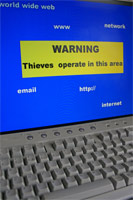 BE WARY OF THE INTERNET
 In hopes of finding CRAP in Howard Rheingold's article "Crap Detection 101", I find most of his information to pass the CRAP test, meaning it holds all the essential necessities required to be a useful source of information on the web: Currency, Reliability, Authority, Purpose/Point of View.
This being despite the fact that the article hasn't been updated since June 2009, and here we are already in February of 2010, the information still holds truth and the links all seem to still work properly. Even, to my surprise and horror, the very suspicious, shocking, and completely disturbing website for the LASIK do-it-yourself-at-home eye surgery. (Which I strongly recommend, you DO NOT try at home.)
A thorough bio of Rheingold is attached to the article, which definitely paints him as a credible source. There is a lot of his background information, including the fact that he teaches Digital Journalism at Stanford and Virtual Community/Social Media at Berkeley.
Over all, I believe this is a good source of information, especially for those who have yet to understand, that just because it is on the internet, doesn’t mean it is true. ….so, do you believe me?
This being despite the fact that the article hasn't been updated since June 2009, and here we are already in February of 2010, the information still holds truth and the links all seem to still work properly. Even, to my surprise and horror, the very suspicious, shocking, and completely disturbing website for the LASIK do-it-yourself-at-home eye surgery. (Which I strongly recommend, you DO NOT try at home.)
A thorough bio of Rheingold is attached to the article, which definitely paints him as a credible source. There is a lot of his background information, including the fact that he teaches Digital Journalism at Stanford and Virtual Community/Social Media at Berkeley.
Over all, I believe this is a good source of information, especially for those who have yet to understand, that just because it is on the internet, doesn’t mean it is true. ….so, do you believe me?
NOTE: Image from Buncombe County News
Crap Detection 101, Tyler Grant
 The first thing I noticed about Howard Rheingold's article is that it was posted on the 30th of June, 2009 at 3:12p.m. Has nothing changed in half a year? At the rate the internet changes, a lot of misinformation could arise that one would invariably have to sift through.
His credentials are top-notch though: he teaches at Berkley, Standford, and De Montfort University in England. Despite this, however, his references come from a drawn out anecdote about teaching his daughter how to wade through scores of crap to get factual information, his own internet habits, and the twitter posts of people involved in the election aftermath in Iran. How reliable is any of this?
This article seems to be his opinion. Although I am aware of some of the little tricks he uses, he often starts sentences with: In my opionion, I personally confronted, I, I, I.... and so forth. My advice to him is to use the eyes in head to catch the overuse of the I's on his page.
I'm still on the fence about him...
Read the article yourself.
Note: Image from Kolabora, Photo credit: Robin Good.
Crap Detection 101, Erik Nelson
 Looking at Howard Rheingold's article Crap Detection 101, I will analyze to see how his work stands up to the method he teaches.
Currency - June 30 2009 at 03:12 PM was the date and time this article was posted. At seven months old, this article is quite dated. Regarding the information within the article, it is still current enough to remain useful.
Reliability - Within the article, the majority of information is tips thought of by the author. There are a few quotes from other sources, but they seem to back up the central point that Rheingold is trying to make. At the bottom of the article is a long list of resources with related pages to help users.
Authority - Crap Detection 101 was written by Howard Rheingold. He has also written three books, as well as being involved in numerous technology and communication publications and websites. He has also taught digital journalism and social media. Rheingold appears to be very knowledgeable in communications on the internet. The publishing site does not affiliate with blogs on their site and they state that the author is responsible for its content. The site does have advertisements.
Purpose/Point of View - The content in the article is coming from a biased view that the internet is filled with thieves and scoundrels that only intend to do users harm. It seems that Rheingold only really wants to educate people about the information available to them however, and he is not trying to sell any product to readers.
Overall, I'd recommend this article to others because it passes its own CRAP test and provides knowledgeable insight into the online world that can benefit many people who haven't yet adapted to the land of the internet.
Image from rheingold.com
Crap Detection 101, Isaac Kaplyuk.

What CRAP?
C-Currency; The information written herein Rheingold's article, 'Crap Detection 101', is semi-recent...it was published June 30th, 2009. The site itself is a current site, as it is the San Francisco Chronicle site, and journalistic sites like this must be maintained and updated daily. This entry is current to our topic, as the sites that Rheingold mentions in his report are all still relevant sites within the information realm, such as Twitter, Del.icio.ous, Youtube, and other modern web tools such as RSS feeds.
R-Reliability; The kind of information within this report is in itself about the reliability of other reports, or other bits of information that can be found on the web. This report isn't so much opinion as it is empirical and theoretical knowledge gathered over time, and with personal experience. Is the article balanced? Not really, because the article isn't really an opinion, it's pretty much a crash-course in spam detection, and tips and tricks that the savvy internet user can have at their disposal to avoid being mislead by untrustworthy information, and to better complete research without obtaining faulty information.
A-Authority; The creator of this text is a Howard Rheingold, who is pictured above and to the left. Rheingold is a published writer, artist and the creator of two ground-breaking web communities, Hot Wired and Electric Minds, and he also published his Crap Detection 101 on the San Francisco Chronicle, which adds to the article's credibility. These accomplishments make Rheingold a reputable source, and his interest/aim within this document is to alert people of the perils of info-searching on the web, and how to most efficiently go about doing this task. Although there are advertisements on the page, they are not of the author's doing, and are only as common as you'd expect would be on a news site.
P-Purpose/Point-of-View; The article isn't so much an opinion, but it is rather an article based on experience, which could only lead one to beleive that the statements and thoughts expressed within the article are stemmed from fact. The article is obviously biased, but biased towards people being aware of their actions on the web, and to aid in avoiding being duped on the internet, and to avoid being taken on information-wild-goose chases. The only thing that the author is trying to 'sell' here is information to help the average inter-web user to be more web-aware, and to help avoid useless or misleading information on the web.
Note: Image from oclg.org
Crap Detection 101, Nancy Gordy
 "Crap Detection 101" by Howard Rheingold passes the CRAP test only to a certain extent. It is a fairly current article for the topic although it hasn't been updated since June of last year. The article is quite opinionated and this is demonstrated through his use of the words "to me..." and retelling his instances with his daughter.
In the resources, he allows people to suggest resources in the comments section in order to add to his story. I feel as if he should be finding resources on his own to back up his story. Rheingold doesn't use quotations and backs up his ideas only by providing links to sights that can be used for detection purposes.
The site in which this article is posted on indicates that it is not responsible for any of the content written and that it does not write or edit any of the content either. It also indicates that the authors display their own perspectives. Rheingold does have some credentials behind his name.
Advertisements are displayed on the right hand side of the web page and on top which takes away from the article.
It seems that this article is opinionated and focuses only on Rheingold's experiences with locating information on the Internet. He is trying to sell us his way of fact checking.
Note: Image from Joi on flickr.
Lecture 4: Fundamentals of Accuracy

Activity 1:
http://www.sfgate.com/cgi-bin/blogs/rheingold/detail?entry_id=42805
Perform the “CRAP” test on Rheinghold’s article
Write a blog entry (not a comment) on your findings
Include an image that relates to your topic
Remember: remain professional and neutral in your writing style and tone
CRAP Test:
Currency –
- How recent is the information?
- How recently has the website been updated?
- Is it current enough for your topic?
- What kind of information is included in the resource?
- Is content of the resource primarily opinion? Is it balanced?
- Does the creator provide references or sources for data or quotations?
- Who is the creator or author?
- What are the credentials?
- Who is the publisher or sponsor?
- Are they reputable?
- What is the publisher’s interest (if any) in this information?
- Are there advertisements on the website?
- Is this fact or opinion?
- Is it biased?
- Is the creator/author trying to sell you something?
Examples of Common Mistakes
Names and titles - these go wrong more than anything else
Numbers and math – “Anytime journalists get their hands on numbers and math there’s a huge probability that things will go wrong” ~ Craig Silverman
Typos -You can blame spell check programs for some of these though it's best not to rely on these programs
Misquotes and misidentifications – “I’ve seen a lot of men become women, mothers become daughters" (Silverman). It can get really bad when identifications are mixed up and a crime is involved.
Activity 2:
Go online
Look for a factual or grammatical error in a local news publication
Add your finding (with a link to the original article) and correction as a comment to today’s lecture post
20 minutes
Checklists:
In a 2000 article for the British Medical Journal, James Reason (one of the world’s leading researchers of human error) emphasised that “it is often the best people who make the worst mistakes - error is not the monopoly of an unfortunate few.”
Examples of Checklist:
Detroit Free Press
We Regret the Error - Accuracy Checklist:

Activity 3:
Find a news story in a local publication
Go on a fact-checking mission
Complete as many of the accuracy check-list points
Create a blog post
Include all bibliographic information of your chosen story
Include your analysis of accuracy errors and corrections
Embed an image appropriate to your topic
Write a short paragraph on the importance of accuracy in journalism
Homework:
Read Chapter 4
HTML INFORMATION: To make your links in a comment "clickable" use this formula:
< a href="URL GOES HERE">url or key word here< /a >
REMEMBER to remove spaces before the < and > brackets!
Note: Top image, "Fact or Crap," from Calendars.com.au.
Subscribe to:
Posts (Atom)


