Showing posts with label grammar. Show all posts

Monday, March 22, 2010

Lecture 10: Grammar Review & Web Editing

The outline for today's session looks like this:


  • Punctuation Review
  • Editing for the Web
  • Midterm information
  • Punctuation Practise - If Time Permits


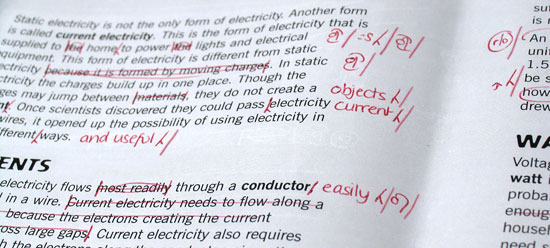
For the midterm, know these copyediting symbols. You will be asked 10 questions on the midterm:


Monday, March 8, 2010

Lecture 8: Copy Editing & Proofing

Outline:

  • Copy Editing and Proofing Differences
  • Spelling
  • Copy Editing Practise
  • Add to E- Portfolio
  • Homework

Copy Editing

  • Editing or copyediting checks for errors in spelling, grammar, punctuation and usage in text that has not been formatted yet.
  • Ensures proper and consistent use of voice, style, sentence and paragraph construction.
  • Does not include changes in content, nor does it always ensure that the written document is logical, factually complete or accurate; but it does ensure clean, decisive writing that is free of errors.
  • Copy editors may suggest changes to clarify the writer's intended message or to improve the fluency of the written text; and they may query the author about content or wording that does not seem to be accurate or logical; but they do not change the content of the copy.
  • Editing should always precede proofreading.


Proofing

  • Proofreading brings one final look at documents that have already been edited and formatted, whether by one or several individuals
  • Proofing focuses on typing mistakes, missing words, punctuation, capitalisation etc...
  • Check for any remaining errors and inconsistencies in use of grammar, language and format.


Activity/Practise

  • Choose THREE blog posts written by students in class (just not your own)
  • Copy edit and proofread the THREE posts
  • Include your suggestions/corrections in the comments of each post
  • Remember to remain professional in language use and tone


Spelling

  • Review page 64 in your texts
  • Note differences between Canadian and American spellings
  • Remember “practise” = verb, “practice” noun


15-20 minutes

E-Portfolio

  • Opportunity to add to your E-Portfolio
  • You may also take this time to edit any posts you already have drafted
  • Remember to label appropriately
  • Include links, images and copyright information


Homework

Blog Report 2 Due at the end of (next) class so come prepared! You will have the class time to work on your report.
(remember to label correctly)


Note: Top image from La Pierre Editing, Proofreading Image from Graphic Design Employment, Primitive Spelling Bee image from Mrs. Cummins' Classroom.

Thursday, March 4, 2010

National Grammar Day

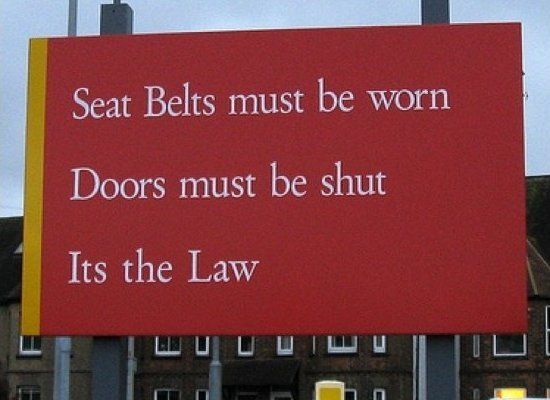
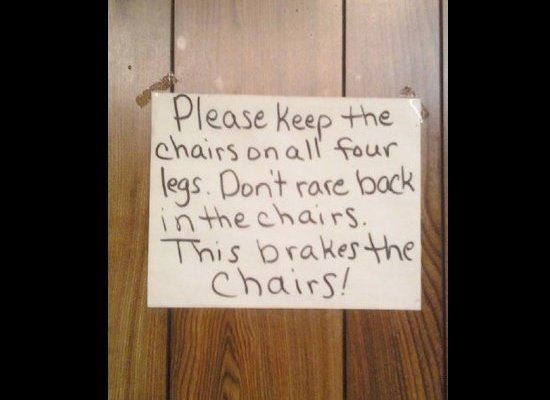
The Huffington Post celebrates grammar day with a collection of "most common grammar mistakes in the English language."

Note: All images from the Huffington Post.


Monday, January 25, 2010

Lecture 3: Grammar and Journalism 2.0


Outline:


Review Subject-Verb Agreement
Activity
Journalism 2.0
Add to E-Portfolio
Homework


Definition:


Subject–verb agreement is “the matching of the number and person of the subject to the form of the verb. When the subject is third-person singular and the verb is in the present tense, the verb takes the –s inflection, as in: The dog barks all night. He bothers the neighbours.
With other subjects and in other tenses, verbs (with the exception of be) do not change to match the number or person of the subject: I sleep, we sleep, he slept, they slept.”


Basic Idea:


Singular subjects need singular verbs; plural subjects need plural verbs.
My brother is a nutritionist.
My sisters are mathematicians.


Visit the Subject-Verb Agreement site: http://grammar.ccc.commnet.edu/grammar/sv_agr.htm

After reviewing the information, try one of the quizzes at the bottom of the page. How did you do?

Activity:

  1. Explore the Edmonton Journal site and read the headlines (http://www.edmontonjournal.com/)
  2. Choose one or two headlines that interest you most and identify the subject and verb in each
  3. Then scan the articles that accompany them, collect three or four sentences in which you also identify the subject and verb.
  4. Post your two headlines with subject and verb identified as a comment to Lecture 3


Activity:

Read the lyrics


How does the song describe the Rainy Day Man? (answers on board) Is the agreement correct?


“The Reconstruction of American Journalism” (http://www.cjr.org/reconstruction/the_reconstruction_of_american.php)


"What is under threat is independent reporting that provides information, investigation, analysis, and community knowledge, particularly in the coverage of local affairs."


"Reporting is becoming more participatory and collaborative. The ranks of news gatherers now include not only newsroom staffers, but freelancers, university faculty members, students, and citizens."


"Universities, both public and private, should become ongoing sources of local, state, specialized subject, and accountability news reporting as part of their educational missions. They should operate their own news organizations, host platforms for other nonprofit news and investigative reporting organizations, provide faculty positions for active individual journalists, and be laboratories for digital innovation in the gathering and sharing of news and information."


Links mentioned in class:


http://www.edmontonsun.com
http://www.huffingtonpost.com/walter-cronkite/
http://darynkagan.com/index.html
http://news.google.com/
http://digg.com/
http://english.ohmynews.com/
http://www.flickr.com/
http://en.wikinews.org/wiki/Main_Page


Note: Image from wikinews.


Independent news is thriving, but mainstream news still dominates online:
CTV is the top choice for Canadians (41%)
CBC Television (38%)
CTV is especially popular in Atlantic Canada (61%) and Manitoba and Saskatchewan (60%)
Albertans are torn between Global and CTV for their top news source, with both stations selected by 42%


Stats from: http://www.angusreidstrategies.com/uploads/pages/pdfs/2007.06.06%20National%20Media%20Press%20Release.pdf


Homework:


Read “Crap Detection 101” by Howard Rheingold


http://www.sfgate.com/cgi-bin/blogs/rheingold/detail?entry_id=42805


Note: Grammar cartoon from grammar café and image of Howard Rheingold from SF Gate.